miércoles, 22 de febrero de 2017

ICT for Translation and Iterpreting.

Because of the increasingly demand of expert linguists on the society, which has been highlighted in the Paris Declaration where it was released a stratement highlighting the "global shortage of quealified linguists" and warning that it could happend that "international prnagisations will be unable to perfom their vital tasks" if this isn't take as a serious thing. So to fight against this problem, we need to bring a carefully training to our translators and interpreters, enabling them to "bridge the gap between the theoretical leaning in the  form of the instruction of the calssroom and the real-life application of the knowledge in thework environment".


Using ICT for expert linguistis and training resoruces:

Learners learn by doing, but for the experience to be valid, it is essential to learn in context  which needs to be authentic. Also, a big amount of researchers and teachers hace accepted that the computer can provide an alternatice to real-life setting, and that technology can be used without sacrificing the authentic context to learn. Other researches have that training materials are needed to be prodeuced in formats which make them easily transferable and accesible, but the programmes must be foces on professional practice and cooperative constructive work as to be essential to place the interactive multimedia resource in a social context.


Empowering students and fostering team-work and professional skills:

Scientists have indentified two different learning styles: learners who apprehend the process (active doers) and those who are "reflective watchers", but those two refines the pattern into four types of learners: learner-reflectors, learner-theorists, lerners-pragmatists and learners-activists which correpond to different  points that gives the linguists the needed to design and ensure all types of learner can engage with the tasks in hand by ICT facilities.

Which those four types of leraners, we can make a good team for example in the use of a wiki tool, which make learners play different roles and consider different perspective, complementing and interchanging the knowledge and the cosmovision of everyone of the members on the team.


Enabling a reflexive and critical learning experience:

For the learning process to be complete, it is needed to incorporate the reflectin, articulation and integrated assesment in which ICT can contribute. The reflexive and critical dimension, which will foster flexibility and an awareness of preofessional skills in expert linguists; we can also find that access to professional booths of ICT is limited during the training of linguists but it is needed to keep the skills of the translators and interpreters up. So to this, ICT have a clearly place in expert linguists training programmes, but there are still issues that lies in the students by themselves.

lunes, 20 de febrero de 2017

The role of ICT sector in expanding economic opportunity.

In the past 20 years innovation has accelerated dramatically and it makes able to technology to increases productivity when lots of people have access to it. The fundamental rol of ICT in modern economic are:

  • Reduction of transaction costs and improvement of productivity.
  • Offering immediate connectivit.
  • Substitute for other, more expensive means of communicating and transacting.
  • Increase choice in the marketplace.
  • Provide access to otherwise unavailable goods and services. 
  • Widen the geographic scope of potential markets.
  • It's a channel of knowledge and information.
But also we can easily find the economic opportunity obstacles:
  • Geographic isolation.
  • Lack of competition and high prices for consumers.
  • Lack of competition and low prices for producers.
  • Legal exclusión.
  • Political voice.
  • Social capital.
The bussiness case for engagemnt establishes that ICT companies have a great opportunity when it is about helping the poor get richer because it means the have new and expanding markts. The ICT increase efficiency, productivity and acces to goods, services, information and markets by power (skills) and connectivity (sistem) which equals to a content (high demand for ICT).

Developing and emerging markets can drive innovation, which must be not only afforable realiable and relevant, but have a low total cost of ownership, including power and maintenance costos.. But while innovations are required to tap and grwo low-income markets, they have potentially broad applicability in higher.income segments and in developed countries as well.

lunes, 13 de febrero de 2017

Factor Affecting Teachers Use of ICT

Nowadays it is important and inevitable to include the use of ICT in our daily routine and mostly in education, which is one of the most important ambits where it is applied.

But the problem lies not only on the avalaibility or the will of the students to use them but in the teacher itself. We can find that the use of the computers as a tool in the classroom is something common by now, but most of the teachers does not know how to use it properly and actually, they use not even the fifty percent of the real capacity of the ICT and they know it, so this awareness of not knowing how to use the potential of the ICT and the fact that maybe they are not able to solve technical problems, makes them feel some rejection to the ICT.

But they don't say this. They sometimes use excuses as such "I don't have time" to justify their fear, together with the low levels of accesibility in some areas of theworldso they can not have the accurate infraestructure in schools.

So there must be a level and quality in the new programs of training teachers to encourage them to use ICT because the professional develoopment hs a significant influence on howwell ICT is embraced in the classroom and an inadequate preparation to use technology stops beaing a fence for teachers, who must be evolving with time and the new generations they have to teach to,  but also the key is having a postive attiud to learning how to develope the computer competences, this plus the proficiency and the acces to information, makes a higher levels of technology integration.

Teachers and everybody no matter their profession nees to become lifelong learners and develope their skills and abilities of learning to become transformational leaders all around the world and through the time. This is why we can fin a sistematic model of teaching which make us question:
  • What should be taught.
  • How it should be taught.
  • Which technology should be used.

martes, 7 de febrero de 2017

Electronic era.

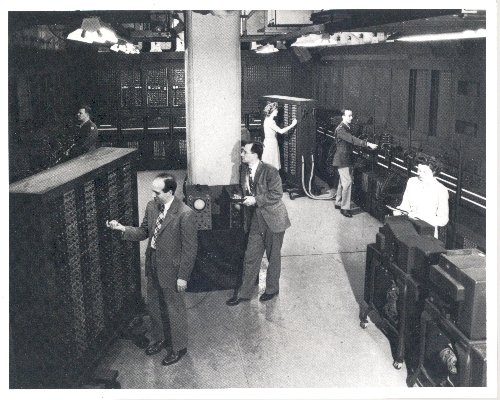
It stated in 1946 and finished in 1957; now we are in the microelectronic era.

It is marked by the development of electronic devices and is divided on periods.

  • Transistor period.
  • Integrated circuits period.
  • Computer processors period.
The great inventions ins this era were:
  • Electronic numerical integrator computer.

  • The transistor.

  • The integrated circuit.

  • The computer processor.

Electromechanical era.

It goes from 1840 to 1940 and represents an important change in technology history because they converted information and knowledge into electrical impulses; the key was the discvery of ways to control and use the electricity.

The most important iventions on this era were:
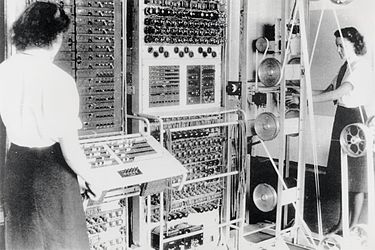
  • Colossus machine (1st. calculator created by the british).


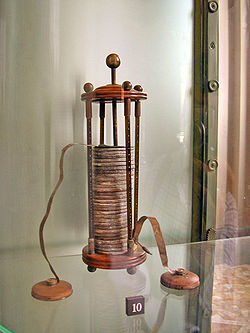
  •  Voltaic battery (by Alessandro Volta in 1799).
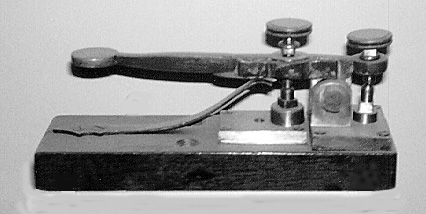
  •  Telegraph (by SAmuel F.J. Morse in 1832).
  • Telephone and radio (by Bell and Watson in 1876; Marconi invented the first radio-telegraph).
  • Mark 1(by IBM) .


Mechanical era.


The mechanical age, representing a connection between the past and modern technology. Here is where the innovations were important for the technology as we know nowadays because of the next inventions:


jueves, 2 de febrero de 2017

Pre-mechanical era.

The history of information technology is divided in four ages: pre-mechanical, mechanical, electromechanical and electronic. 

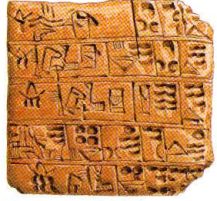
The pre-mechanical age goes from 3000 b.C. to 1450 a.d. During this age, all was about the writing, starting with petroglyphs, pictographs and ideographs, but the most important fact was the Sumerian cuneiform script because it was the first information system and then the Phoenicians made the first alphabet.


A second important aspect of the pre-mechanical age, was the invention of paper, with the Egyptians using papyrus in 2600 a.d. and the rice paper in China in 100 a.d., as time passed by, the paper allowed the Greeks and Egyptians to start with the first books and libraries. Finally it was the apparition of the numeric system in India in 100a.d. which marked this age.